

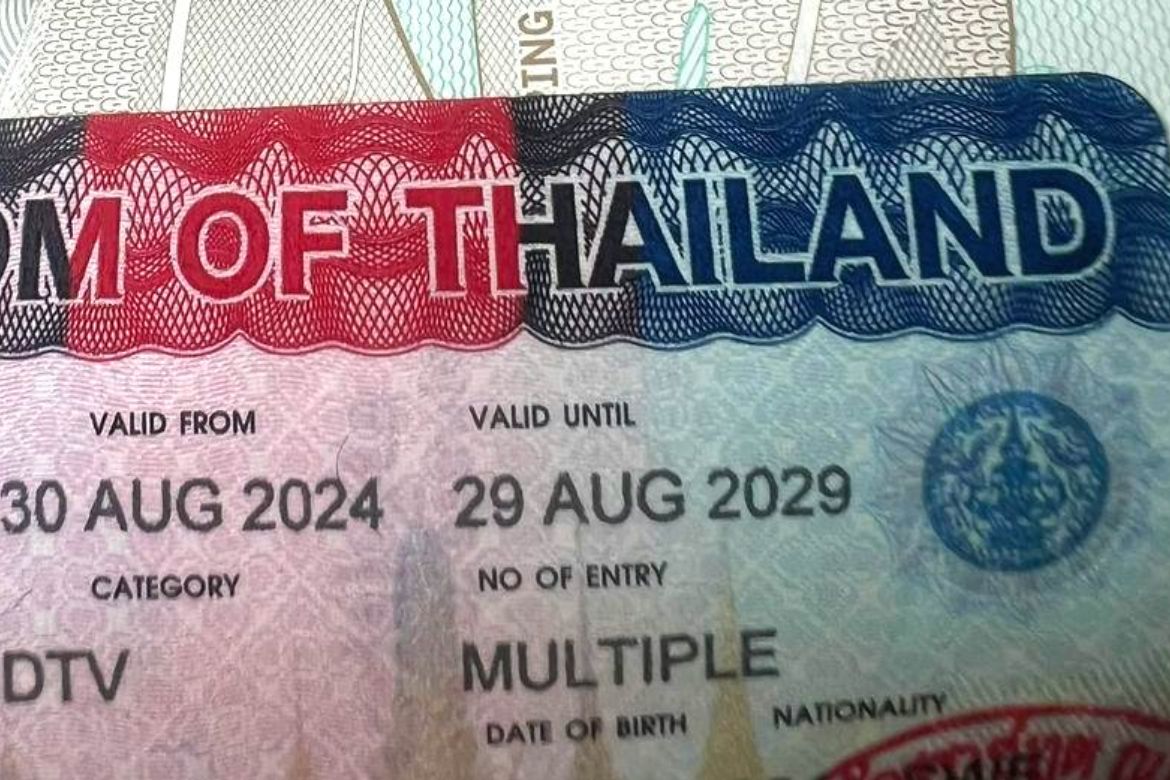
The Destination Thailand Visa (DTV) was introduced 8 months ago by the Thai government, aiming to boost tourist numbers. This visa has slowly revealed its benefits and limitations, providing a clearer picture for potential applicants.
The DTV is primarily an activity-based visa, suitable for tasks like remote working or participating in soft power initiatives such as Muay Thai. It allows a stay of up to 180 days per entry, and the visa itself is valid for 5 years. There is no limit on how many times you enter: applicants can arrive by land, sea or air, and each arrival begins a fresh 180-day period without resubmitting documents or proving funds again.
Entry Process
According to feedback from the DTV Facebook group, which boasts about 30,000 members, visa holders face minimal hassle at entry points as long as they present the required QR code. This ease of entry underscores the visa’s user-friendly nature.
Renewal and Extension Policies
A 180-day extension can be requested once per entry at a Thai immigration office, taking a single stay to roughly 360 days. It is not automatic: the extension is granted at the officer’s discretion, carries a government fee, and is refused where paperwork or evidence of funds falls short. Applicants who are refused generally exit and re-enter instead, which starts a new 180-day period on arrival.
Comparison with Other Visas
DTV has replaced several older non-immigrant visas. It now accommodates individuals with Thai families or those receiving long-term medical treatment, allowing for stays longer than the typical 90 days provided by previous visas. Notably, extensions granted at local immigration tend to favor applicants from these specific categories who can provide updated records.
Limitations and Restrictions
Despite its advantages, the DTV has some drawbacks, primarily because it classifies holders as tourists. Challenges may arise in areas like opening bank accounts or extending driving licenses. DTV holders must comply with standard immigration procedures, including local address reporting and 90-day check-ins, without any additional perks.
Employment and Income Considerations
DTV explicitly prohibits employment in Thailand and limits interactions with the Thai economy for digital nomads. Furthermore, there are complex regulations regarding personal income tax and the transfer of foreign income to Thailand, which are best navigated with the help of a Thai accountant or lawyer.
The DTV is ideal for repeat tourists engaged in specific activities but is not suitable for those seeking a retirement or long-term residency option. As noted by Pacific Travel Advisers, the DTV should be viewed as an “enjoy-yourself” visa that does not extend to permanent resettlement, although it may lead to other long-term visas such as Thailand Privilege Visa for those who qualify.